

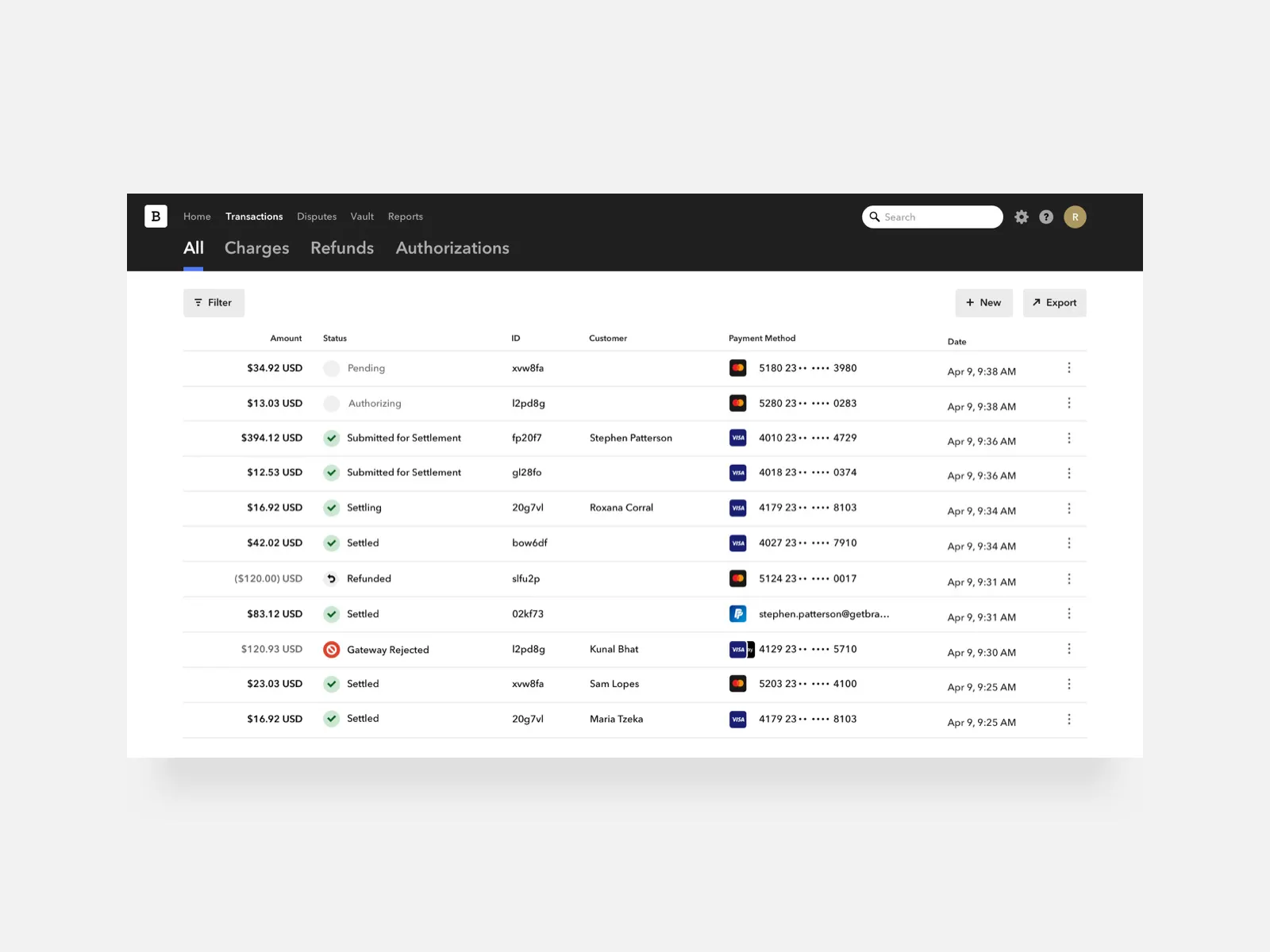
The Braintree control panel is the operational hub where merchants configure payments, monitor transactions, resolve disputes, and manage data access. I led a cross-functional effort to modernize a legacy product into a consistent experience with a clearer visual identity, partnering daily with design, engineering, support, accounts, and risk.
Impact
The rebuild shipped measurable adoption gains while laying the groundwork for broader platform unification.
65%
Merchant self-adoption
100%
Rollout coverage
Foundation
PayPal + Braintree unification
Context and scope
The control panel powers reporting, payment configuration, refunds, chargebacks, and integrations. Over years of incremental change, the product lost coherence: patterns diverged, ownership was fragmented, and support load continued to climb.
The challenge
- Product: no single owner and uneven UX quality.
- Business: competitive pressure from fast-moving rivals.
- Engineering: a looming platform migration.
- Support: growing operational burden for merchants.
Goals
- Clarify core workflows by understanding who uses the panel and why.
- Surface insights in context so merchants can act without digging.
- Reduce support tickets by removing friction and enabling self-service.
Discovery and research
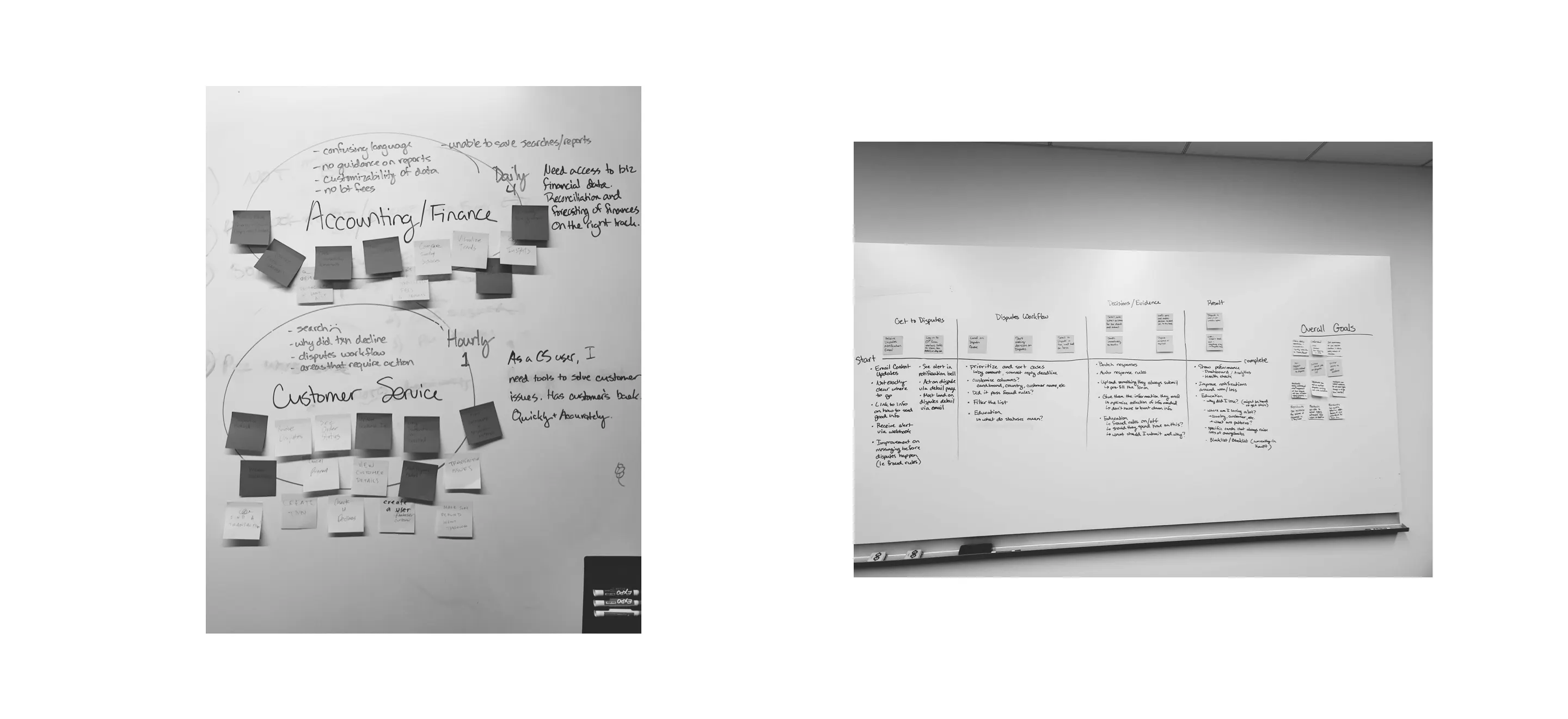
We combined qualitative and quantitative inputs to reveal both behavior and sentiment. I led interviews with merchant users, instrumented the legacy interface to understand real workflows, and synthesized years of survey data with support and account insights.
That work produced a set of personas that grounded decisions and clarified the differences between daily operators, finance teams, and technical admins.
Designing for real-world variance
Merchants differ in size, sophistication, and workflow. The product needed to serve edge cases without sacrificing the core flows that most teams rely on. We balanced flexible pathways with consistent navigation and predictable UI patterns.
Information architecture and system design
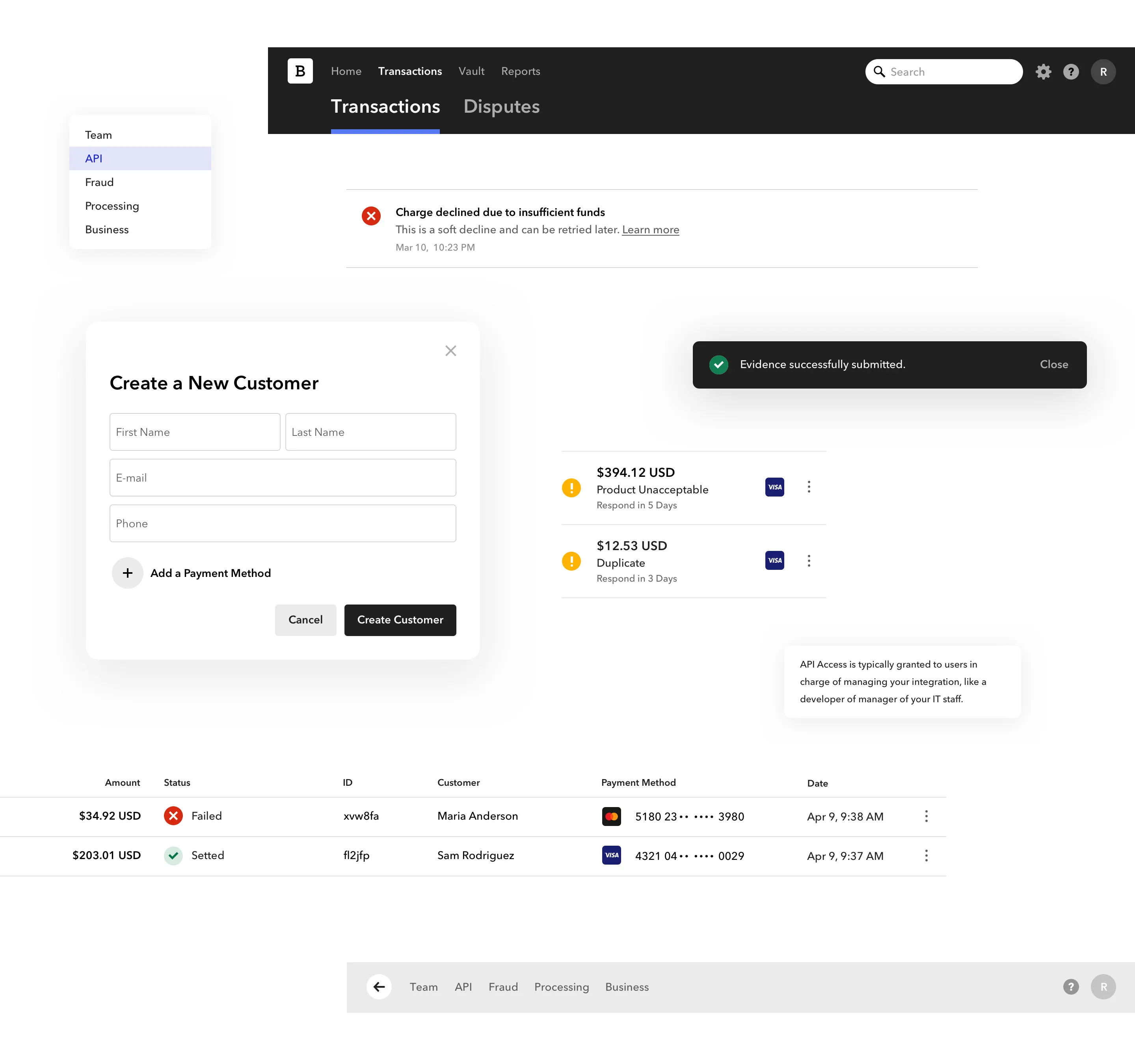
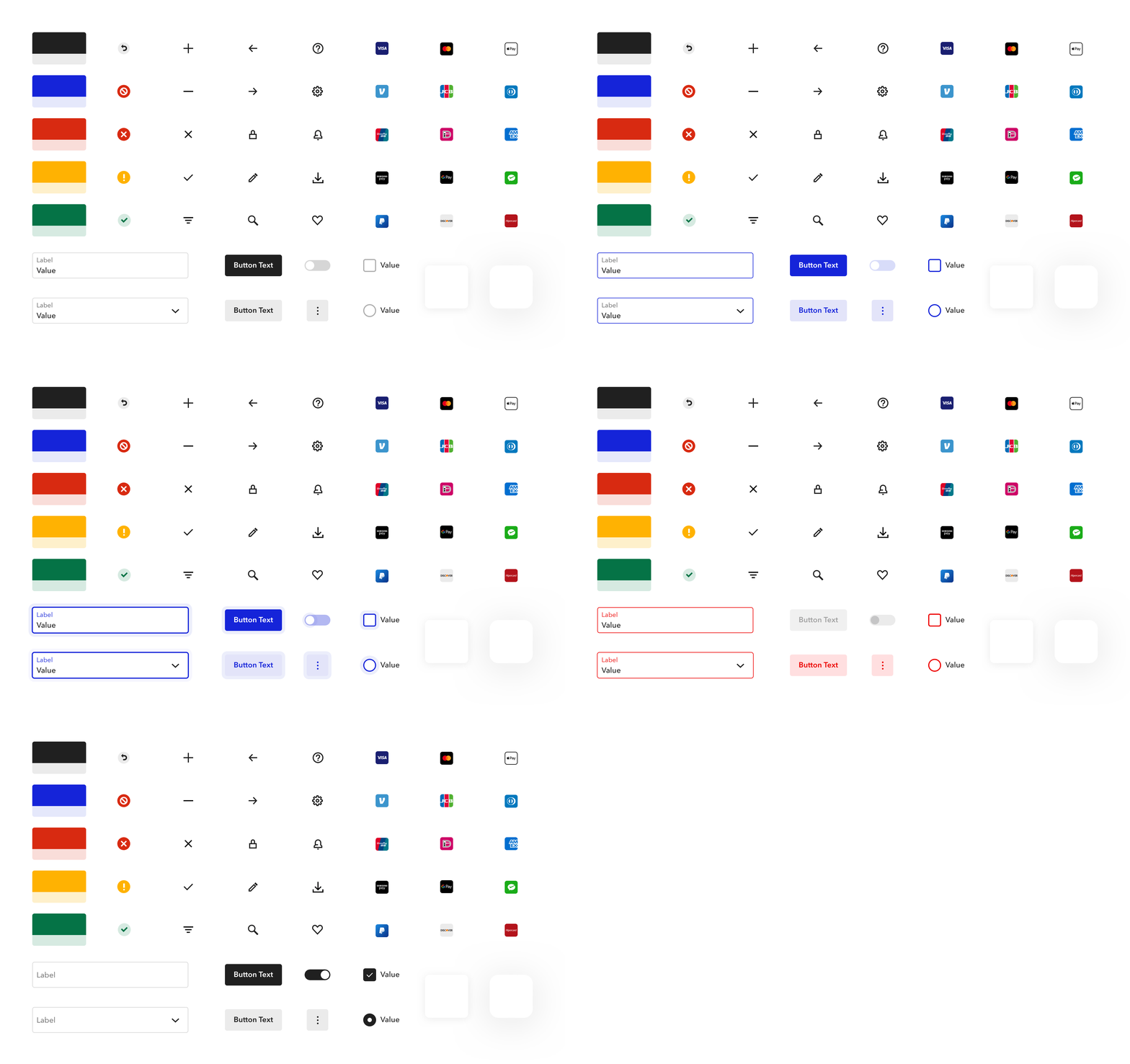
We restructured the IA to mirror how merchants think about their jobs, creating a durable foundation for future expansion. In parallel, we built a shared UI library that aligned the product with Braintree's brand while enabling multiple engineering teams to ship consistently.
Deep dive: disputes experience
Disputes are one of the most time-sensitive workflows in the control panel. We focused on making them easier to find, easier to triage, and faster to resolve, while also helping merchants improve win rates and reduce dispute volume over time.
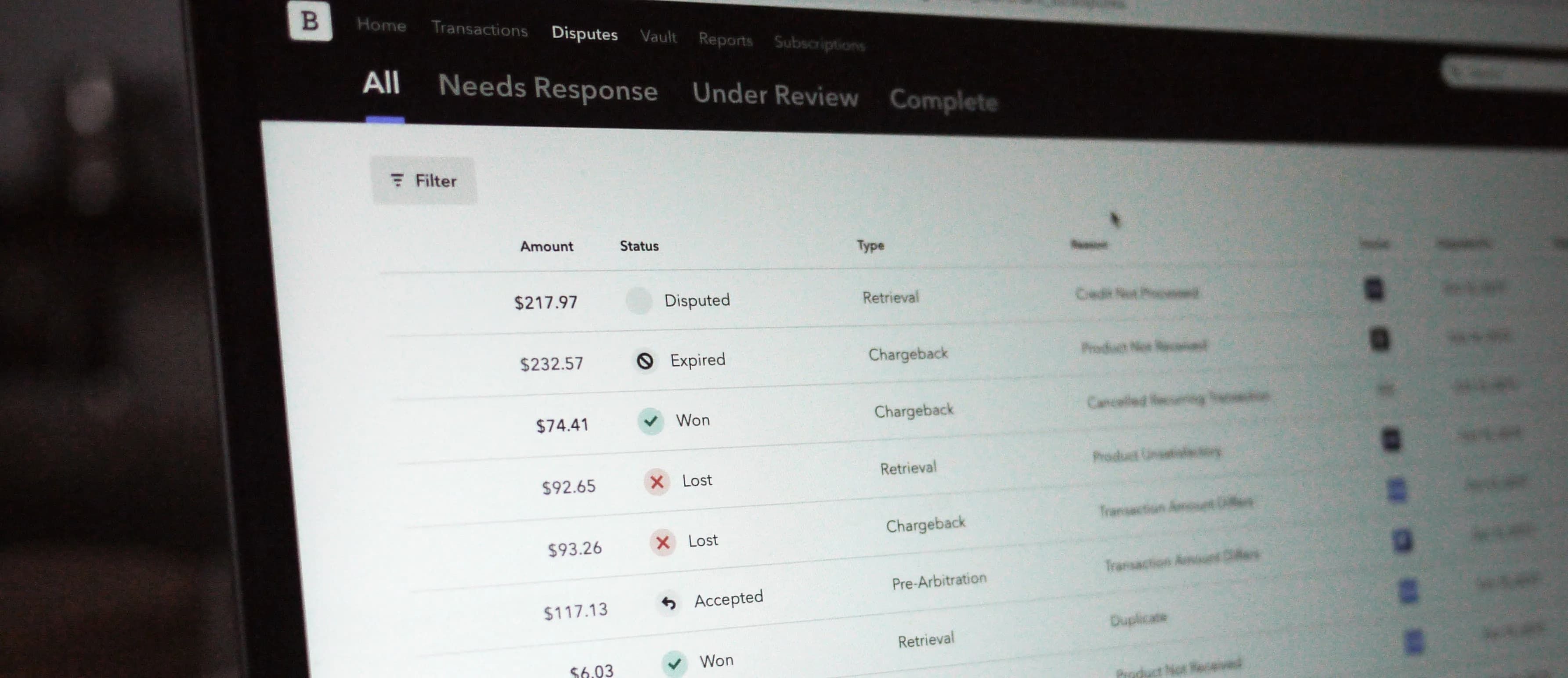
The direction was shaped by direct merchant feedback, interviews with internal teams who support dispute resolution, and usage data from the disputes section.
- Surfaced disputes in top-level navigation for quicker access.
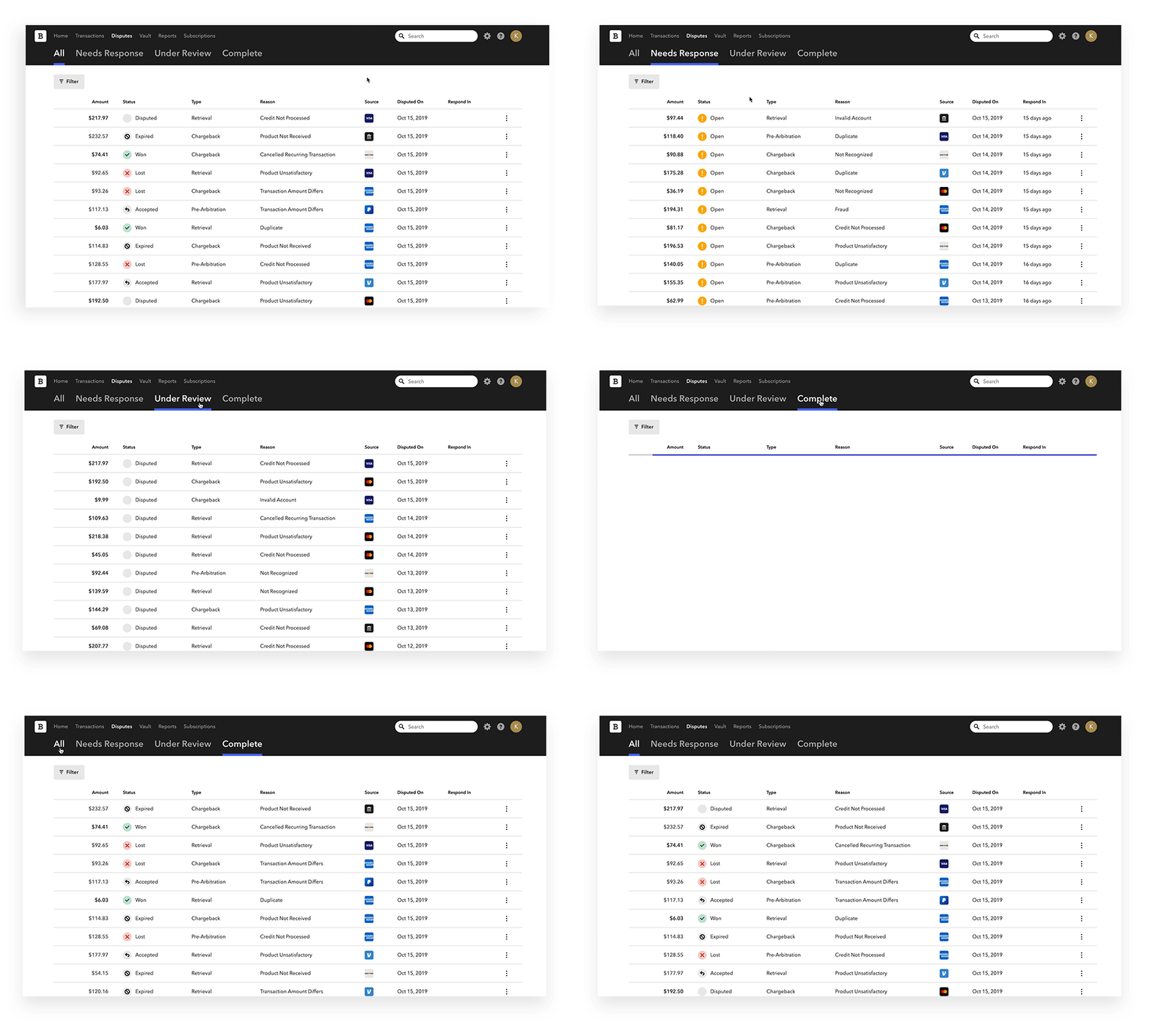
- Introduced a clearer, scannable table of all disputes by default.
- Created workflow-driven queues (Needs Response, Under Review, Complete) to keep attention on what matters now.
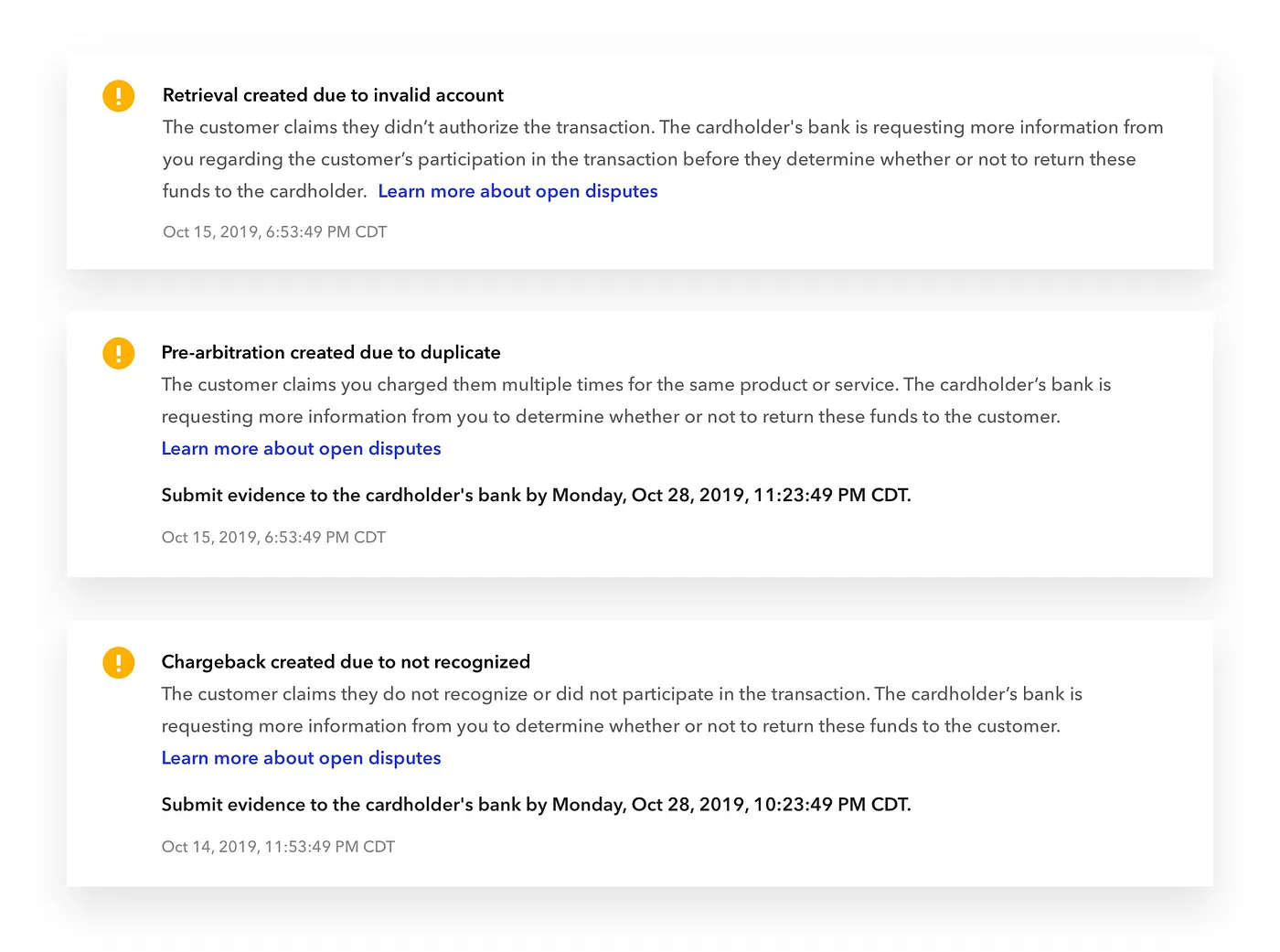
- Clarified status definitions so merchants can decide how to respond with confidence.
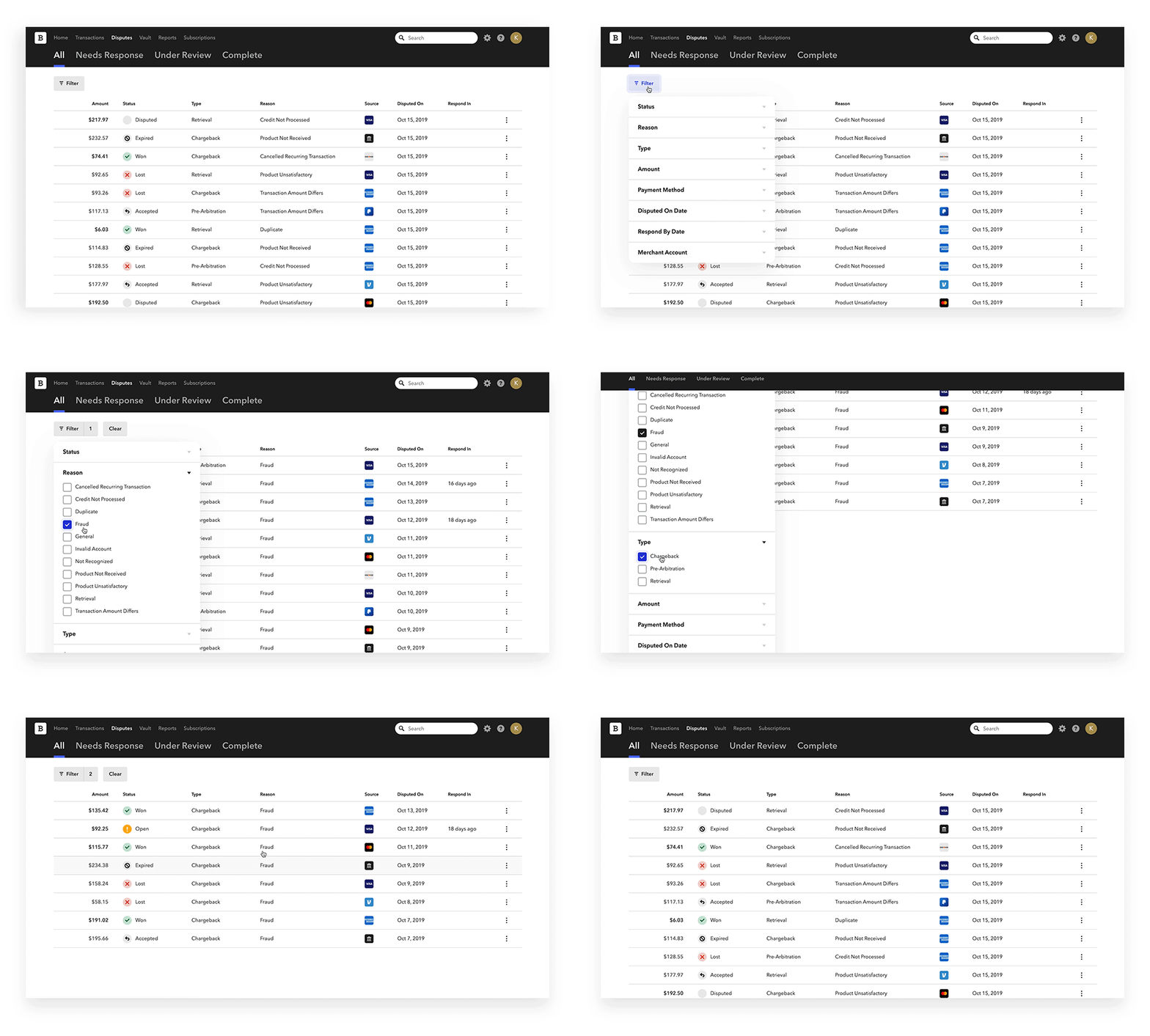
- Added fast, flexible filtering that updates results immediately.
Merchant validation
We used account managers to recruit top merchants for previews, bringing fresh feedback into the process and re-energizing relationships. Design and engineering joined the sessions to hear feedback directly, and the work gained visibility with leadership through consistent updates.
Rollout
To mitigate risk, I designed a phased rollout plan starting with alpha previews for merchants like Uber, Stitch Fix, and Airbnb, followed by internal testing. Engineering built a bridge that let the old and new interfaces coexist, allowing merchants to adopt the new experience without disruption.
Impact
- 65% merchant self-adoption of the new UI.
- Established groundwork for PayPal + Braintree platform unification.
- Rolled out to 100% of merchants with updated documentation.
Challenges and learnings
- Legacy constraints created uncertainty in scope and timelines.
- Technical challenges were unpredictable.
- Cross-team dependencies required constant coordination.
- Clear, frequent communication kept leadership aligned on progress and value.
What’s next
The new control panel is a foundation for ongoing improvements, making it easier to evolve workflows and launch new capabilities as merchant needs grow.