
Context
I used ChatGPT as a nutrition coach to help me better understand the glycemic impact of my meals with a goal of lowering my A1C. A1C measures average blood sugar over roughly three months. A1C overview.
Impact
I didn't have complicated target metrics to hit—just a curiosity around building a tool to spur meaningful behavioral change. Two months later, as of the end of August, I had measurable impact.
-12 lbs
Weight reduction
-10 bpm
Avg resting heart rate reduction
3.4%
A1C reduction (5.8 → 5.6)
Layered on top of this was more commitment to cardio exercise, of which I now average 150 minutes of high intensity cardio per week.
Problem
As I became more interested in how my lifestyle affects long-term wellbeing, my doctors offered broad preventative guidance to keep key health markers like A1C in range—nutrition tips, weekly activity goals, and a long list of small lifestyle tweaks.
It felt unclear how those small daily changes would add up, and difficult to commit when the feedback loop could take months.
Solution
I became curious how ChatGPT could help provide more context on metabolic health and glucose stability.
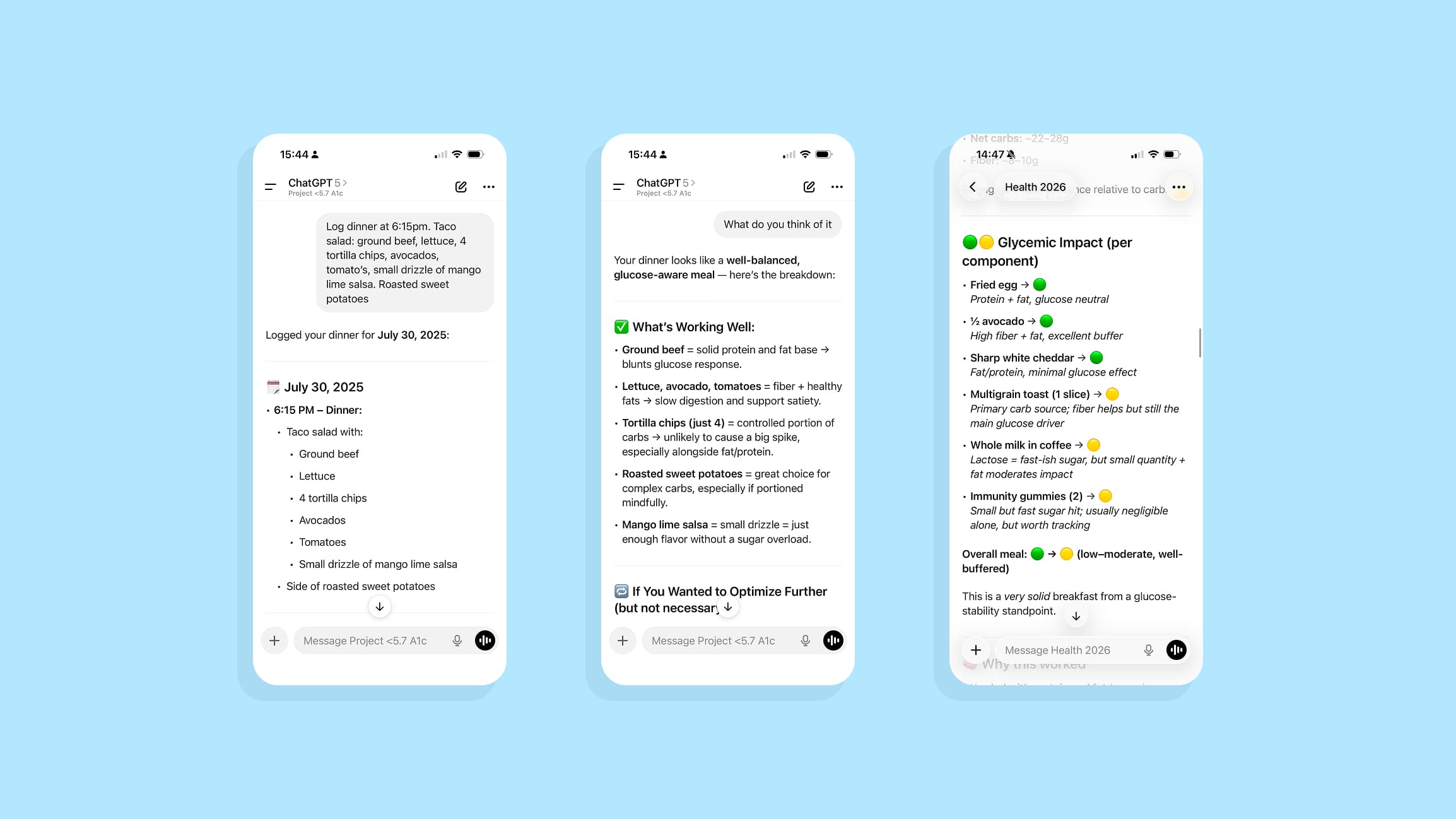
What began as conversational exploration and ad-hoc food journaling eventually turned into a repeatable system. The conversations became less exploratory as I started to understand how eating differently fit into my day-to-day, and I transitioned the chat into a full-blown project.
The project focused on a structured approach to logging daily nutrition and getting real-time feedback to track glycemic impact and macros.
Usage
I asked ChatGPT for some stats to help break down how I've been using the project since its inception:
Exploratory phase
~30–35%
Early July: I experimented with what to track (meals, snacks, alcohol, workouts) and how to track it (emojis, macros, glycemic impact).
Pure logging
~40–45%
Once the rhythm set in, the bulk of the conversations became short food journal entries like “Log Cobb salad – 7:15pm.”
System refinement & prototyping
~20–25%
Mid- to late July onward, I started prototyping UI in React that could interface with ChatGPT, adding emoji coding, relative timestamps, and API flows.
What's Next
ChatGPT worked surprisingly well as the primary interface for this project, but I started to hit some limitations.
- I want a running log of my food journal.
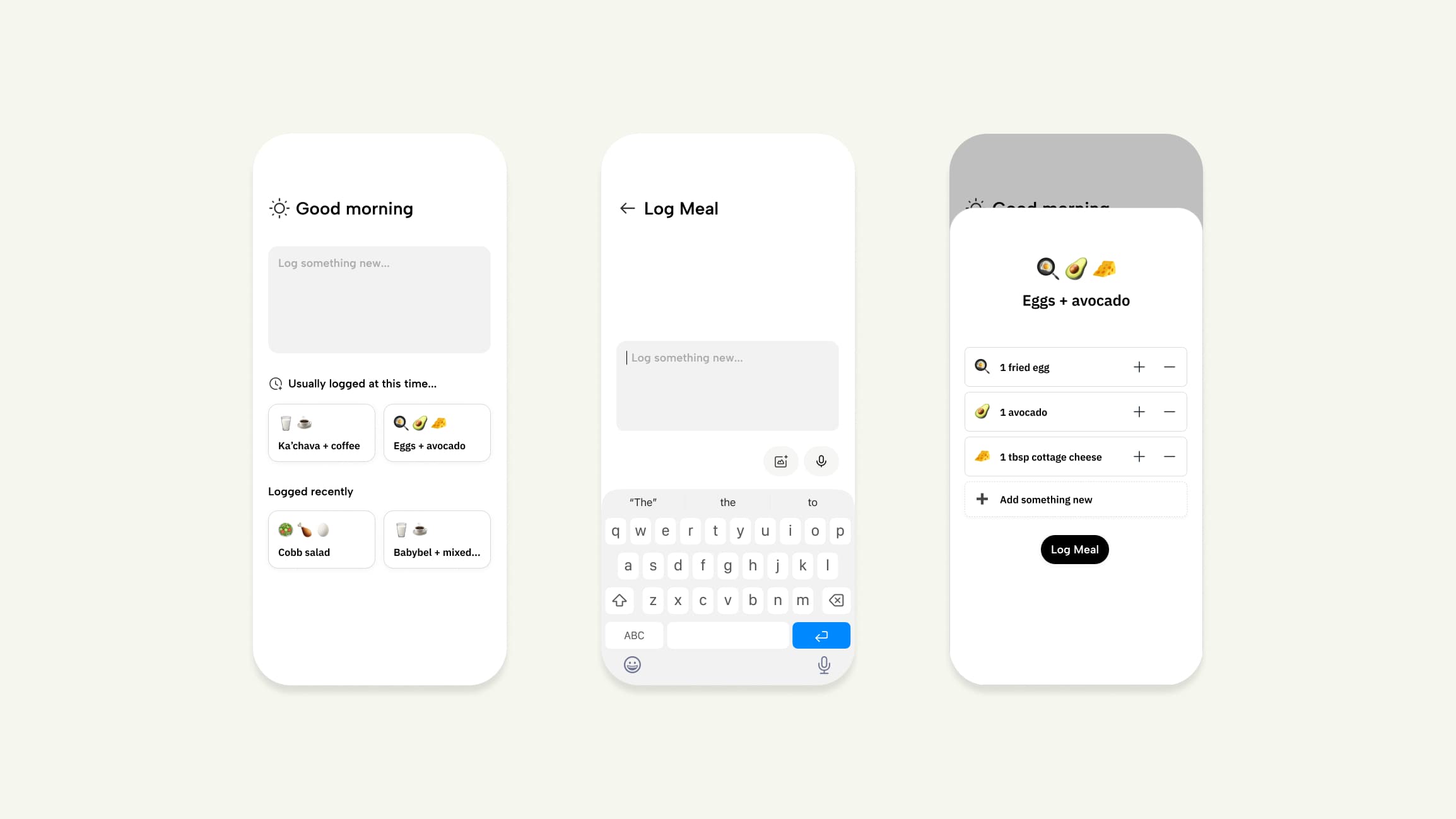
- I want quicker shortcuts to log standard entries without typing them out every time.
- I want running logs of trends and patterns.
- ChatGPT got details wrong sometimes (timestamps, time zones, or the wrong day).
- The conversational UI is powerful, but verbose. A dedicated UI layer would make interpretation and navigation more robust.
Functional prototyping: Figma → OpenAI API + Play
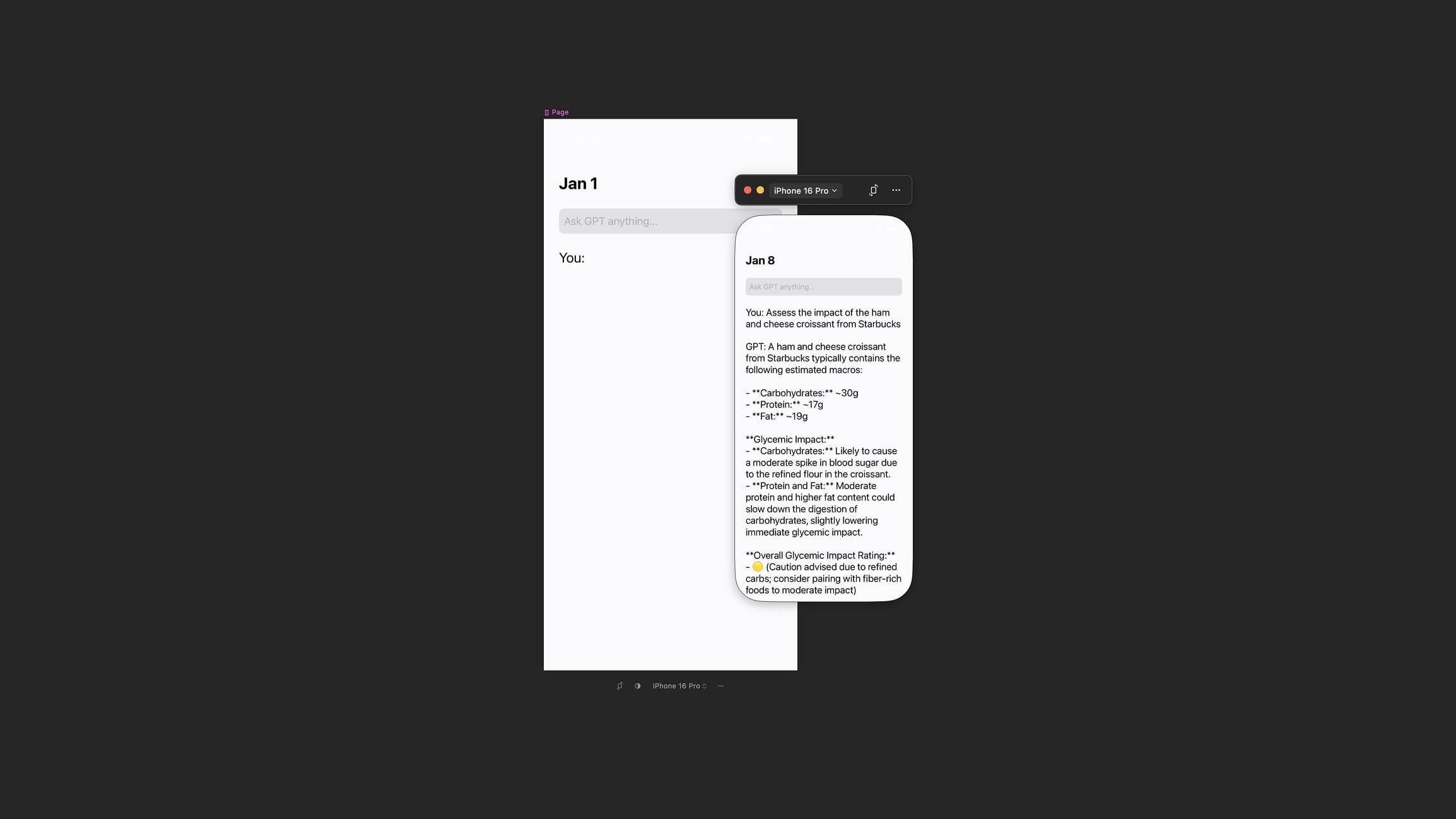
I started prototyping a standalone app from three different angles:
- Figma: Quickly mocking up user flows and light UI.
- OpenAI API: Experimenting with the OpenAI API.
- Play: Exploring Play's iOS prototyping and API tooling.
These approaches overlap slightly, but they helped inform my POV to define a more useful tool for me. I also used ChatGPT to inform my experimentation in each of these tools:
- React: ChatGPT helped me scaffold a React app to interact with the OpenAI API.
- Figma: I polled ChatGPT to understand key use cases and workflows.
- Play: I used ChatGPT to help summarize documentation and functionality.